 Store
StoreHalloween: the history behind our favourite celebration
Every year on 31st October, people around the world celebrate Halloween with costumes, pumpkins and plenty of sweets.
But where did this popular tradition come from?
Halloween has its roots in Samhain, an ancient Celtic festival celebrated over 2,000 years ago in Ireland, Scotland, and other parts of northern Europe. Samhain marked the end of the harvest season and the beginning of winter. The Celts believed that on this night, the boundaries between the world of the living and the spirit world blurred and softened, so they lit bonfires and wore disguises to ward off unwanted visitors.
The name Halloween comes from All Hallows’ Eve, the evening before All Saints’ Day, a Christian holiday celebrated on 1st November. Over the centuries, traditions from different cultures combined to create the Halloween we know today.
Halloween is a fantastic opportunity to bring culture, history and language learning into the classroom. To help you make the most of the season, we’ve prepared a selection of engaging classroom activities and resources for different age groups.
Download our free Halloween activities for your classroom and get ready for some frightfully fun learning:
Activities for Primary students
Activities for Secondary and adults
Fun facts (share with your students!):
🎃 Jack-o’-lanterns were originally made from turnips, not pumpkins. Irish immigrants later adapted the tradition when they discovered pumpkins in North America.
🍬 Trick-or-treating became popular in the United States during the 20th century, evolving from older customs in which people went from door to door singing or offering prayers in exchange for food.
Últimos artículos relacionados
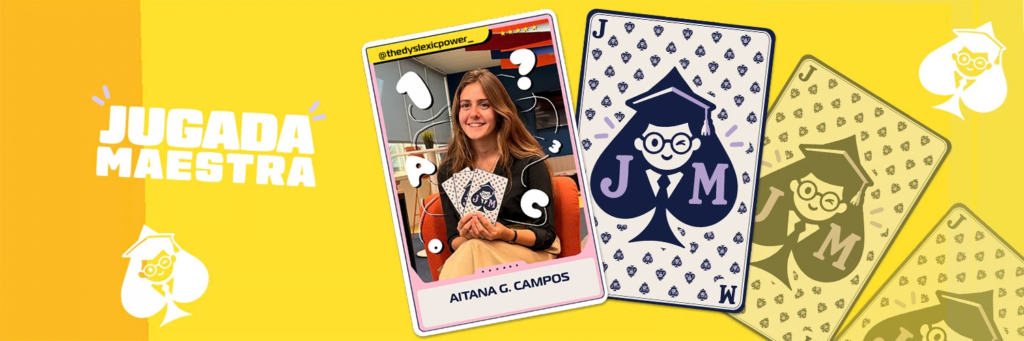
Una mirada diferente a la dislexia
Estrenamos Jugada Maestra, un programa donde los docentes comparten soluciones prácticas a los desafíos del aula. Primera parada: dislexia. En este primer...
Leer artículo
Las primeras necesidades de apoyo empiezan a hacerse visibles
Cómo utilizar la IA para intervenir a tiempo y adaptar en segundos cualquier enunciado: un método especialmente útil para alumnado con necesidades...
Leer artículo
A different perspective on dyslexia
Let us introduce you to our new programme, “Jugada Maestra”, where teachers share practical solutions to classroom challenges. First stop: dyslexia. In...
Leer artículo
How to use AI to adapt a task in seconds
Not only for specific learning needs, but for everyone in your class. There’s a student in every classroom: they seem to understand...
Leer artículo
Un regard différent sur la dyslexie
Nous lançons « Jugada Maestra », une émission dans laquelle des enseignants partagent des solutions pratiques aux défis rencontrés en classe. Première...
Leer artículo What are we learning today?